AgentOS: Turning Disparate AI Agents into a Cohesive Digital Workforce
AgentOS Review 2026: Orchestrate AI Agents Like a Company
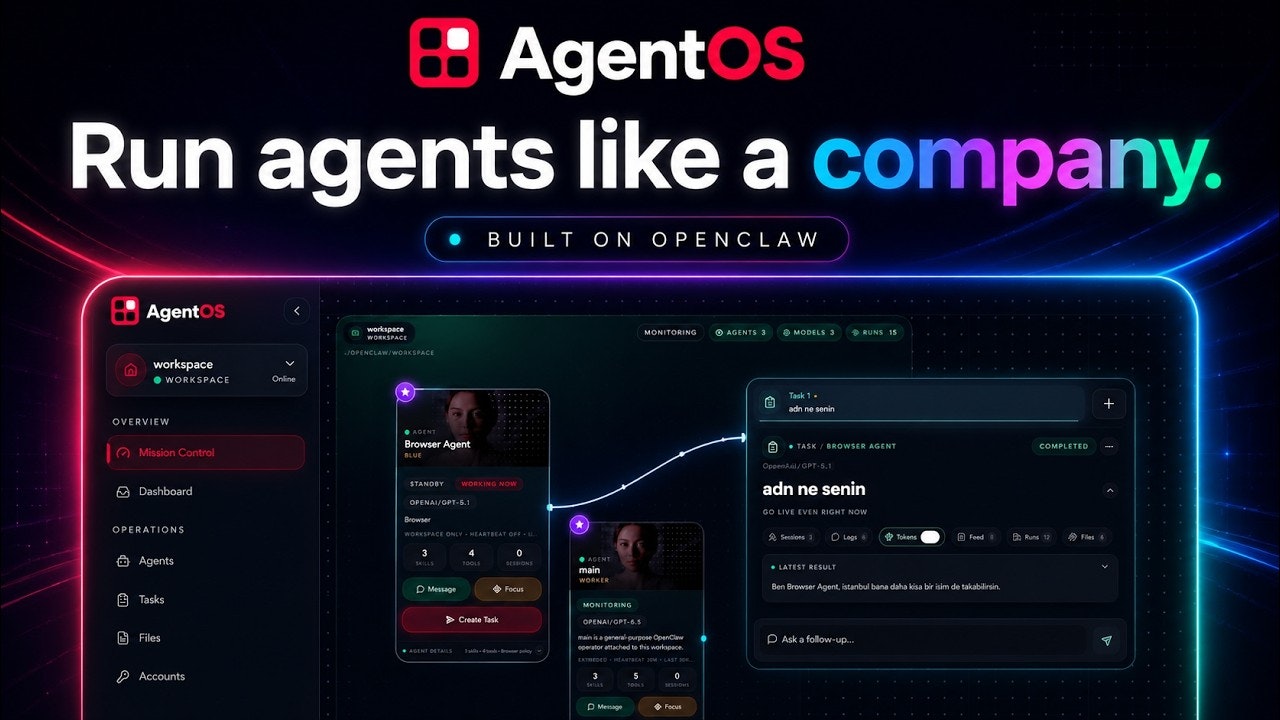
AgentOS provides a unified, local-first control layer to manage and orchestrate multiple AI agents, tasks, and workspaces.
The problem it solves
Pain Points / Context Tax
Many organizations struggle with the inherent complexity of deploying, managing, and coordinating multiple AI agents. Without a centralized control layer, tasks can become siloed, visibility into agent operations is limited, and scaling an AI-driven workflow becomes a significant challenge. AgentOS directly addresses this by providing a unified system to oversee and direct these autonomous entities.
What AgentOS Is
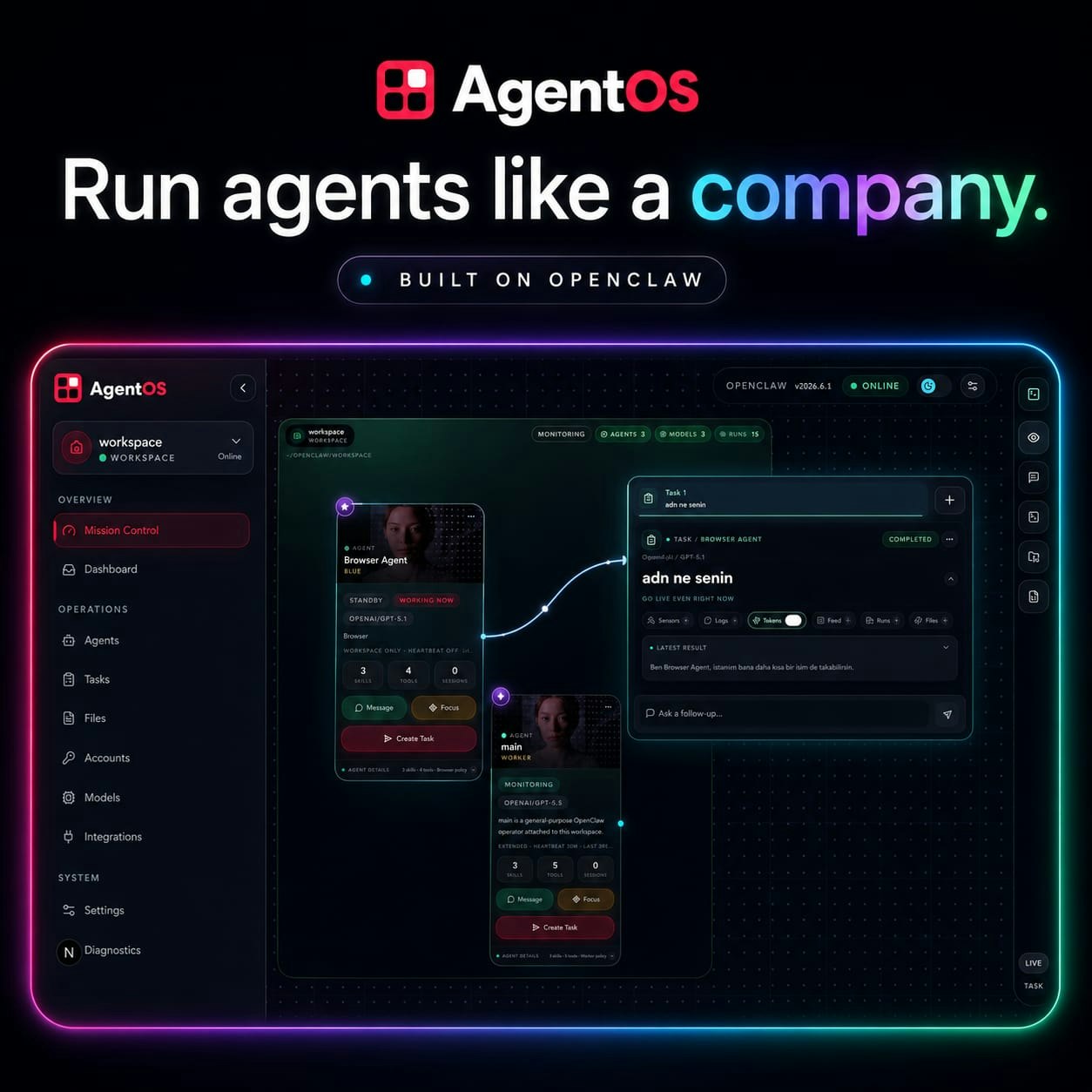
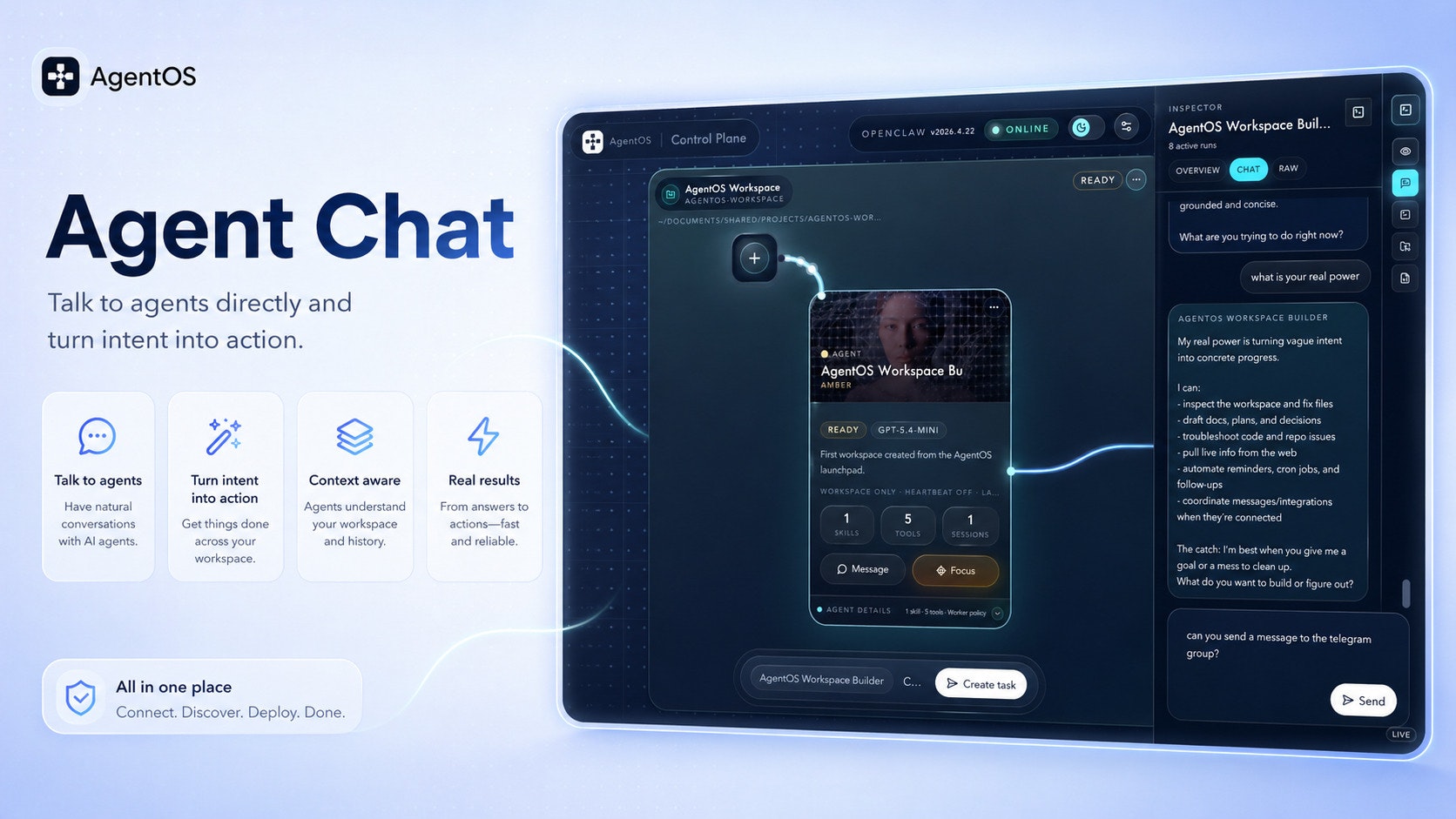
AgentOS offers a local-first control surface built on OpenClaw, enabling users to define workspaces, assign tasks to various AI agents, manage job queues, and oversee approval processes. This centralized management system allows for greater control, visibility, and efficiency in running complex AI operations, effectively letting users 'run AI agents like a company' by providing a single pane of glass for all agent activities.
Pricing
AgentOS is an open-source project available on GitHub, meaning there are no direct licensing fees for the software itself. Users are responsible for their own hosting infrastructure costs (e.g., servers, cloud compute), as well as any API usage fees for large language models (LLMs) or other third-party services that their integrated AI agents might utilize. This model offers significant flexibility and cost control, particularly for those with existing infrastructure or specific privacy and customization requirements.
Final Verdict
AgentOS presents a compelling vision for orchestrating AI agents, offering a powerful, local-first control plane for managing complex digital workforces. Its open-source nature and emphasis on self-hosting provide unparalleled control and privacy, making it an excellent choice for technically proficient users and organizations with stringent data requirements. While it demands a higher technical investment for setup and maintenance, the capabilities it unlocks for coordinating sophisticated AI operations are substantial. AgentOS is a foundational tool for building the next generation of autonomous systems, empowering users to truly 'run AI agents like a company' rather than just deploying them individually.
What people are saying
Verbatim quotes from Product Hunt — not paraphrased by us.
“Manage AI agents, tasks, workspaces from one control layer.”
“Run AI agents like a company. AgentOS helps you coordinate workspaces, agents, tasks, jobs, approvals, and runtime visibility from one local-first control surface built on OpenClaw.”
What AgentOS Is
Comprehensive review of AgentOS, an open-source, local-first control plane for managing and orchestrating multiple AI agents and tasks.
See it in action
Screenshots and launch media from the official Product Hunt listing.
How It Works
- 1Set up your local AgentOS control plane on your preferred infrastructure.
- 2Define workspaces within AgentOS to logically organize your AI agent operations and projects.
- 3Integrate and configure your specific AI agents (built on OpenClaw or compatible frameworks) into the AgentOS environment.
- 4Assign specific tasks and jobs to individual agents or teams of agents, defining their objectives and parameters.
- 5Monitor agent activity, progress, and runtime visibility from a single, comprehensive dashboard.
- 6Implement approval workflows for critical agent outputs or decisions, ensuring human oversight where necessary.
Real-World Use Cases
Automated Content Generation Workflow
Customer Support Automation
Data Analysis and Reporting
Privacy & Technical Details
- AgentOS is a local-first control plane, meaning core operations and data management can occur on your own infrastructure, significantly enhancing data privacy and security compared to many cloud-hosted alternatives.
- It is built on OpenClaw, an open-source framework, offering transparency, extensibility, and customization options for developers and organizations.
- The open-source nature allows for community-driven development and auditing of the codebase.
Pricing
AgentOS is an open-source project available on GitHub, meaning there are no direct licensing fees for the software itself. Users are responsible for their own hosting infrastructure costs (e.g., servers, cloud compute), as well as any API usage fees for large language models (LLMs) or other third-party services that their integrated AI agents might utilize. This model offers significant flexibility and cost control, particularly for those with existing infrastructure or specific privacy and customization requirements.
Honest Pros & Cons
Pros
- • Open-source and local-first architecture provides maximum control over data, privacy, and infrastructure.
- • Offers centralized management for orchestrating complex multi-agent workflows and tasks.
- • Enhanced visibility into agent operations, task progress, and overall system health.
- • Supports coordination of workspaces, tasks, jobs, and approval processes, mimicking organizational structures.
- • Built on the OpenClaw framework, suggesting extensibility and potential for community-driven enhancements.
Cons
- • Requires significant technical expertise for initial setup, deployment, and ongoing maintenance.
- • No direct commercial support or managed service, relying on community support or self-support.
- • Users bear the costs for underlying infrastructure and any third-party LLM APIs.
- • Steeper learning curve for non-developers compared to more user-friendly SaaS AI automation solutions.
- • Maturity and breadth of integrations may evolve as the open-source project grows.
Comparison Table
| aspect | native | rewind | manual | agentos |
|---|---|---|---|---|
| Agent Orchestration & Control | Individual agent frameworks (e.g., LangChain, AutoGPT) focus on building single agents or simpler chains; lack a unified, high-level control layer for managing many agents across an organization. | Workflow automation platforms (e.g., Zapier, Make.com) connect existing web apps and some AI services, but are not designed for deep, local-first AI agent orchestration, task management, or complex approval flows. | Manually assigning tasks, monitoring individual agent outputs, and coordinating between different AI tools or human teams, leading to significant overhead and lack of visibility. | Centralized, local-first, open-source control plane for managing multiple AI agents, tasks, and approvals across workspaces. |
| Data Privacy & Security | Depends on the specific framework and how it's deployed; can be local but often involves cloud APIs. | Data processed through third-party cloud services, requiring trust in their security and privacy policies. | Varies widely based on tools used and internal protocols; often fragmented. | High control due to local-first deployment; data resides on user's infrastructure. |
| Setup & Maintenance | Requires developer skills to build and deploy agents, but less overhead for a single agent than a full orchestration system. | Relatively easy setup with GUI-based builders; managed by the service provider. | No specific 'setup' for a system, but high manual effort for each task and coordination. | Requires technical expertise for setup, configuration, and ongoing maintenance of the local environment. |
| Cost Model | Free for open-source frameworks; user pays for LLM APIs and deployment infrastructure. | Subscription-based pricing, often tiered by usage (tasks, operations). | Labor costs for human coordination; costs for individual tools or services used. | Free open-source software; user pays for infrastructure and LLM API usage. |
Who Should Use AgentOS
Developers, enterprises, and research teams looking for a robust, open-source, and self-hosted solution to manage and scale complex AI agent systems. AgentOS is ideal for those prioritizing data privacy, extensive customization, and having the technical resources to deploy and maintain local-first software. It suits organizations aiming to build sophisticated, autonomous workflows with fine-grained control.
Who Should Skip
Individuals or small teams seeking a simple, plug-and-play SaaS solution for basic AI automation. Those without significant technical expertise, or who prefer fully managed services and minimal setup, will find AgentOS too complex and demanding for their needs.
Our take
Worth testing
AgentOS presents a compelling vision for orchestrating AI agents, offering a powerful, local-first control plane for managing complex digital workforces. Its open-source nature and emphasis on self-hosting provide unparalleled control and privacy, making it an excellent choice for technically proficient users and organizations with stringent data requirements. While it demands a higher technical investment for setup and maintenance, the capabilities it unlocks for coordinating sophisticated AI operations are substantial. AgentOS is a foundational tool for building the next generation of autonomous systems, empowering users to truly 'run AI agents like a company' rather than just deploying them individually.
Current status: no tracked affiliate for AgentOS. This review is independent and not sponsored. We update this as programs become available (PartnerStack, Impact, etc).