MiMo Code: Scaling AI Agents to Tackle Epic Coding Projects
MiMo Code Review 2026: The AI Agent for Long-Horizon Coding Tasks
MiMo Code introduces explicit long-term memory and dynamic workflows to conquer the context limits of AI coding agents.
The problem it solves
Pain Points / Context Tax
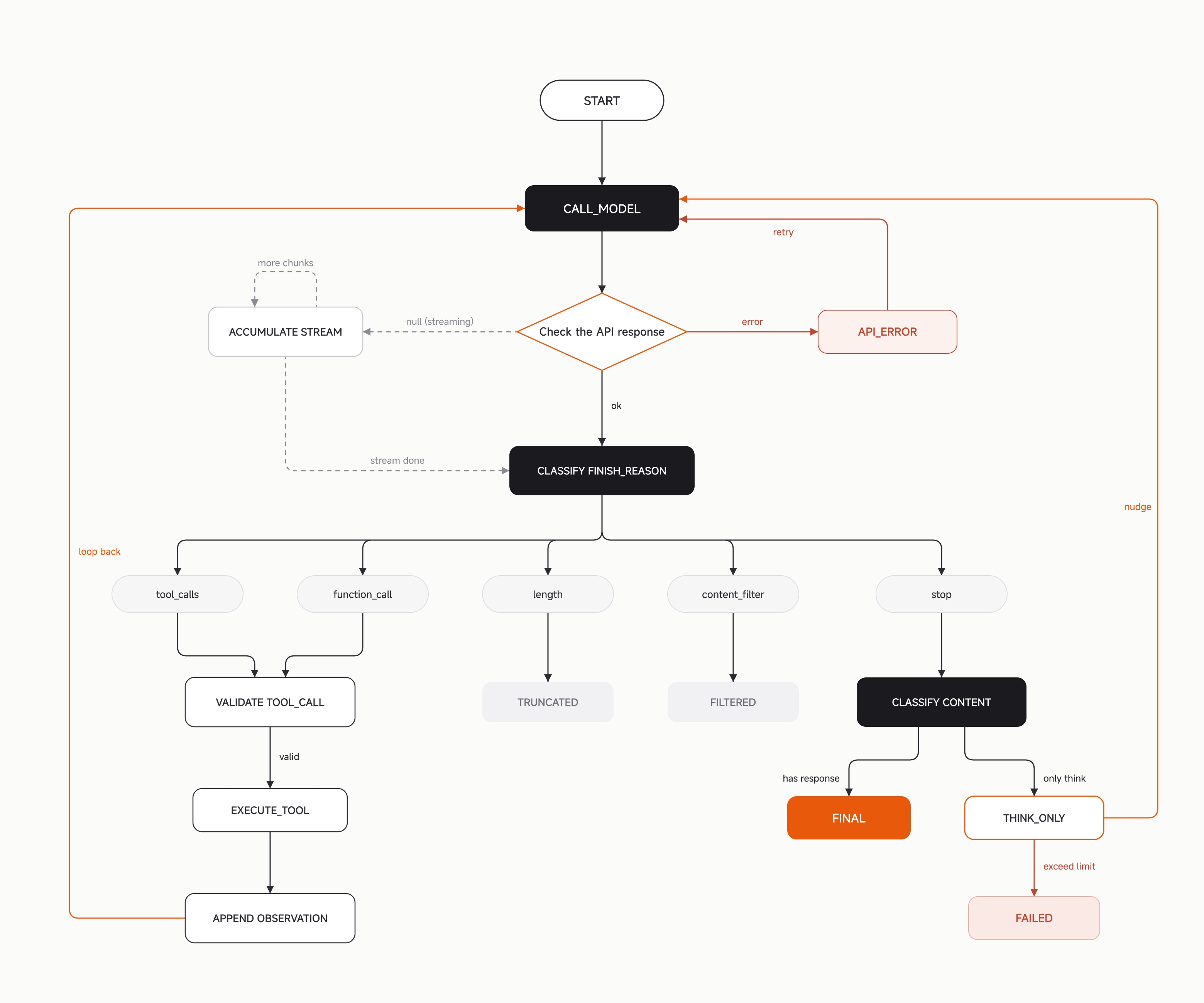
The fundamental challenge for current AI coding agents, and where MiMo Code steps in, is their struggle with 'long-horizon' tasks. Traditional agents, which operate by feeding conversation history into a language model, quickly hit context window limits. As tasks extend beyond a few turns, the model's ability to maintain state, follow instructions, and avoid premature termination degrades significantly. This leads to inefficient back-and-forth, forgotten context, and unreliable task completion, making large-scale automated programming impractical.
What MiMo Code Is
MiMo Code addresses these limitations by introducing a sophisticated architecture centered around explicit memory, enhanced computation, and dynamic workflow. It employs a 'cycle' mechanism with checkpointing and independent subagents to manage state continuity, effectively creating unbounded sessions from the model's perspective. For decision quality, MiMo Code offers 'Max Mode' for parallel sampling and 'Goal' for independent completion verification. Furthermore, its 'Dynamic Workflow' feature allows orchestration logic to be written in code (JavaScript), ensuring deterministic and reliable execution of complex, multi-agent tasks, rather than relying on ambiguous natural language prompts.
Pricing
MiMo Code is open-sourced under the MIT license, making it completely free to use, modify, and distribute. There are no subscription tiers, usage limits, or trial periods. Users can access the source code on GitHub and run it on their own infrastructure, incurring only their own compute costs.
Final Verdict
MiMo Code represents a significant leap forward in AI coding agent capabilities, specifically addressing the Achilles' heel of long-horizon tasks. Its innovative approach to memory management, decision reliability, and workflow orchestration through code offers a robust solution for complex programming challenges. While its terminal-based, open-source nature means a higher barrier to entry for some, the power and flexibility it offers to those willing to invest in its setup are substantial. For serious developers and teams looking to push the boundaries of automated programming, MiMo Code is a compelling, honest, and powerful tool worth exploring.
What people are saying
Verbatim quotes from Product Hunt — not paraphrased by us.
“MiMo Code is designed for long-horizon automated programming tasks, with a core focus on how to maintain decision quality and state continuity over dozens or even hundreds of execution steps.”
“What we need is not better compression, but an explicit storage-and-retrieval mechanism that decides what information should be written into persistent structures, and when it should be recalled.”
“When every step of a process must be executed, branch conditions must be precise, and retry logic must be reliable, it should be guaranteed by code rather than natural language.”
What MiMo Code Is
MiMo Code is an open-source AI coding agent by Xiaomi's MiMo team, tackling long-horizon programming with explicit memory and dynamic workflows. Read our review.
See it in action
Screenshots and launch media from the official Product Hunt listing.
How It Works
- 1**Computation (Single-Turn Reasoning):** MiMo Code enhances single-turn decision-making with 'Max Mode,' which generates multiple candidate solutions in parallel and uses a judge model to select the best one. It also includes a 'Goal' mechanism for independent verification of task completion, preventing premature termination.
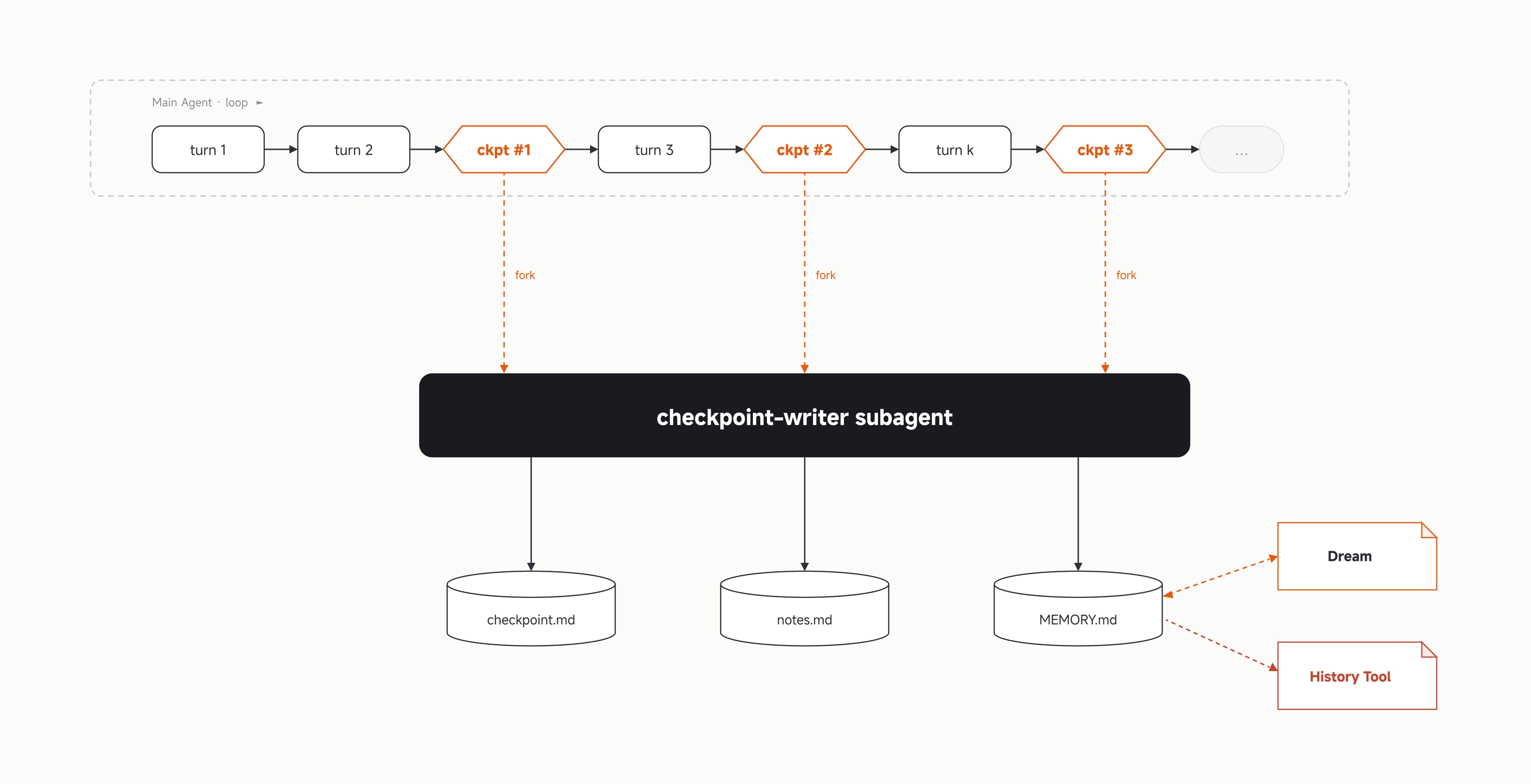
- 2**Memory (State Continuity):** To handle long-running tasks, MiMo Code uses a 'Cycle' system. This involves checkpointing the conversation history at fixed intervals using an independent writer subagent, and then rebuilding the context for the main agent from these persisted files when the context window approaches its limit, creating an illusion of an unbounded session.
- 3**Evolution (Experience Distillation):** While not fully detailed in the provided text, the 'evolution' theme suggests mechanisms for distilling experience across sessions, likely through learning from past task completions and failures to improve future performance.
- 4**Dynamic Workflow (Parallel Orchestration):** For large-scale tasks, MiMo Code allows users to define complex orchestration logic using JavaScript scripts. These scripts dispatch sub-agents and control concurrency, ensuring deterministic execution and reliable branching/retry logic, moving beyond natural language prompts for workflow control.
Real-World Use Cases
Project Language Migration
Complex Feature Implementation
Large-Scale Code Refactoring
Privacy & Technical Details
- Open-sourced under the MIT license, allowing for transparency, community contributions, and self-hosting.
- Terminal-based operation, providing a familiar interface for developers.
- Dynamic Workflow scripts are executed deterministically inside an isolated sandbox, enhancing security and predictability.
- Synchronous writing of `agent()` call results to disk enables recovery from interruptions, ensuring data persistence.
- Built on top of OpenCode, leveraging existing open-source foundations.
Pricing
Verified June 17, 2026MiMo Code is open-sourced under the MIT license, making it completely free to use, modify, and distribute. There are no subscription tiers, usage limits, or trial periods. Users can access the source code on GitHub and run it on their own infrastructure, incurring only their own compute costs.
Official pricing pageHonest Pros & Cons
Pros
- • Designed for long-horizon tasks, overcoming common context window limitations of other AI agents.
- • Explicit memory architecture with checkpointing ensures state continuity across many steps.
- • Dynamic Workflow allows for robust, code-based orchestration of complex, multi-agent tasks.
- • Max Mode and Goal mechanisms enhance decision reliability and prevent premature task termination.
- • Open-source under MIT license, offering transparency, customizability, and no direct cost.
- • Terminal-based interface is familiar to developers and integrates well into existing workflows.
Cons
- • Requires technical expertise to set up and manage, as it's a terminal-based, open-source tool.
- • Max Mode increases token consumption significantly (4-5x), potentially leading to higher API costs for underlying LLMs.
- • The new tool-call syntax is not yet fully implemented, meaning current versions might still face formatting issues.
- • The 'evolution' aspect, while mentioned, lacks detailed implementation specifics in the provided materials.
- • Being a relatively new open-source project, community support and documentation might still be maturing.
Comparison Table
| aspect | native | rewind | manual | mimo |
|---|---|---|---|---|
| Context Management | Context window limits, relies on full history or simple summarization, degrades with length. | Limited to current session/file, no explicit long-term state across complex tasks. | Human memory, external documentation, version control for context. | Explicit storage-and-retrieval, checkpointing, cycles for unbounded sessions. |
| Task Orchestration | Natural language instructions (e.g., 'do A then B'), prone to model misinterpretation/forgetting. | Manual execution of steps, no built-in orchestration for multi-step projects. | Shell scripts, build tools, human-driven process management. | Dynamic Workflow (JavaScript scripts for control flow, sub-agents, parallel/pipeline). |
| Decision Reliability | Single model inference, higher error rate on long tasks, prone to premature termination. | Relies heavily on user intervention for correction and guidance. | Human review, testing, debugging, and iterative refinement. | Max Mode (parallel sampling, judge selection), Goal (independent completion verification). |
| Scalability to Long Tasks | Struggles beyond 10-20 turns, context exhaustion, diminishing returns. | Best for short, focused coding tasks or quick fixes within a single file. | Highly scalable but labor-intensive and prone to human error over long durations. | Designed for dozens/hundreds of steps, explicit memory, robust workflow control. |
Who Should Use MiMo Code
Developers, engineering teams, and researchers working on complex, multi-step programming tasks that exceed the capabilities of standard AI coding assistants. Those who value transparency, control, and the ability to customize their tools will appreciate MiMo Code's open-source nature. It's particularly well-suited for automating large-scale refactoring, project migrations, or implementing significant features where state continuity and reliable task orchestration are paramount.
Who Should Skip
Individual developers or small teams focused on short, isolated coding tasks or quick code generation, where the overhead of setting up and managing a sophisticated agent like MiMo Code might outweigh the benefits. Users who prefer GUI-based tools or are not comfortable with terminal-based workflows and JavaScript for orchestration might find it less accessible. Those looking for a fully managed, plug-and-play solution without any self-hosting requirements should also look elsewhere.
Our take
Worth testing
MiMo Code represents a significant leap forward in AI coding agent capabilities, specifically addressing the Achilles' heel of long-horizon tasks. Its innovative approach to memory management, decision reliability, and workflow orchestration through code offers a robust solution for complex programming challenges. While its terminal-based, open-source nature means a higher barrier to entry for some, the power and flexibility it offers to those willing to invest in its setup are substantial. For serious developers and teams looking to push the boundaries of automated programming, MiMo Code is a compelling, honest, and powerful tool worth exploring.
Current status: no tracked affiliate for MiMo Code. This review is independent and not sponsored. We update this as programs become available (PartnerStack, Impact, etc).