Heads-Up Displays Meet AI Agents for On-the-Go Coding
Monako Glass Review 2026: Heads-Up AI Coding Agents for Wearable Tech
Monako Glass brings AI coding agents to your heads-up display for hands-free, context-aware assistance, promising a sci-fi-like development experience.

The problem it solves
Pain Points / Context Tax
The traditional coding environment often ties developers to a desk, limiting mobility and natural interaction with AI assistants. Monako Glass addresses the pain points of fragmented workflows and the lack of truly context-aware, hands-free coding assistance. Current AI coding tools, while powerful, typically require keyboard input or screen interaction, which can break flow and isn't suited for dynamic, on-the-go problem-solving. This creates a barrier for developers who need immediate, intuitive support without diverting their focus from physical tasks or real-world contexts.
What Monako Glass Is
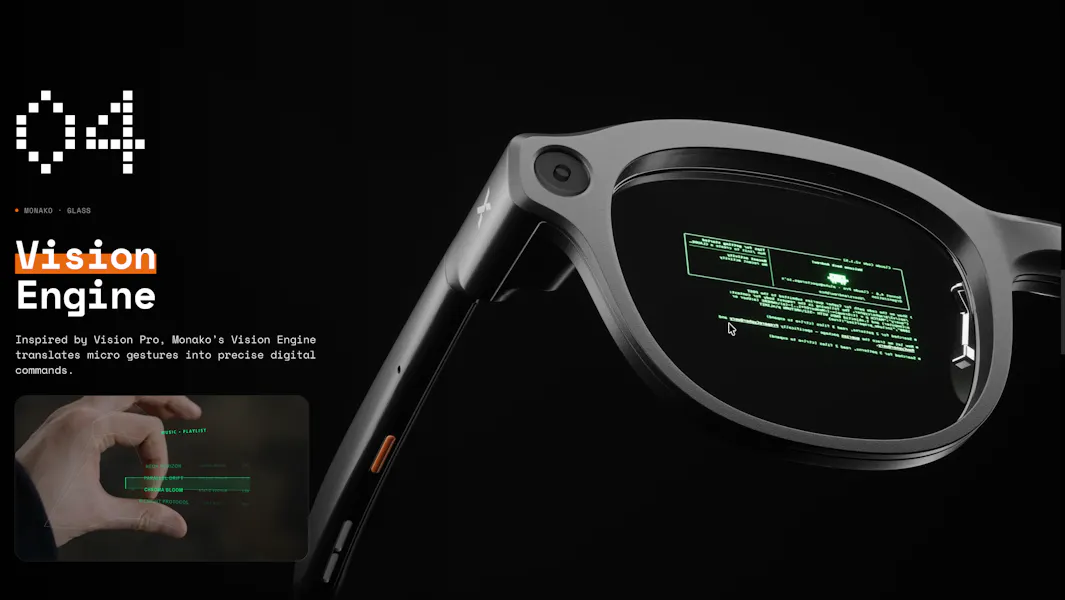
Monako Glass offers a visionary solution by integrating AI coding agents directly into a heads-up display. This allows for hands-free interaction, enabling developers to 'speak apps into existence' and receive real-time, context-specific assistance. By running on a lightweight, high-performance Lua application layer and featuring embedded Rive animations, Monako Glass aims to provide a fluid, responsive, and visually engaging experience. The platform's focus on hyper-personalized apps and seamless interop across Monako Glass, cloud sandboxes, and local machines ensures that developers can maintain their workflow and access powerful AI tools wherever they are, transforming how they interact with code and AI.
Pricing
Monako Glass does not publicly list its pricing tiers or subscription models on its official website. Interested users are directed to join a waitlist or contact the company directly for more information. This suggests a potential enterprise focus or an early-stage product with custom pricing.
Final Verdict
Monako Glass presents a compelling vision for the future of coding, moving beyond the desktop to offer hands-free, context-aware AI assistance via heads-up displays. Its technical foundation, leveraging Lua for performance and Rive for immersive UI, is impressive. While the lack of public pricing and the dependency on nascent hardware are current drawbacks, Monako Glass stands out as a truly innovative platform. It's a bold step towards a sci-fi future of development, poised to redefine how we interact with code and AI, making it a product to watch for those at the forefront of technology.
What people are saying
Verbatim quotes from Product Hunt — not paraphrased by us.
“This is super cool! The idea of hands-free coding and interacting with AI agents through a heads-up display sounds like something out of a sci-fi movie. Can't wait to see more of this!”
“This is truly innovative! The concept of running AI coding agents hands-free from a heads-up display is a game-changer. The use of Lua for a tiny footprint and high performance, combined with Rive for cinematic animations, sounds like a powerful combination. I'm excited to see how this evolves and transforms the way we interact with AI and code.”
“This is a really interesting concept. The idea of being able to interact with AI agents in a hands-free manner, especially for coding, could be a huge productivity boost. The technical details like LuaJIT and Rive animations also sound promising for a smooth and responsive experience. Definitely keeping an eye on this!”
What Monako Glass Is
Monako Glass review: Explore how this platform brings AI coding agents to heads-up displays, offering hands-free development and hyper-personalized apps.
See it in action
Screenshots and launch media from the official Product Hunt listing.


How It Works
- 1AI coding agents run on a heads-up display, allowing for hands-free interaction through voice commands or gestures.
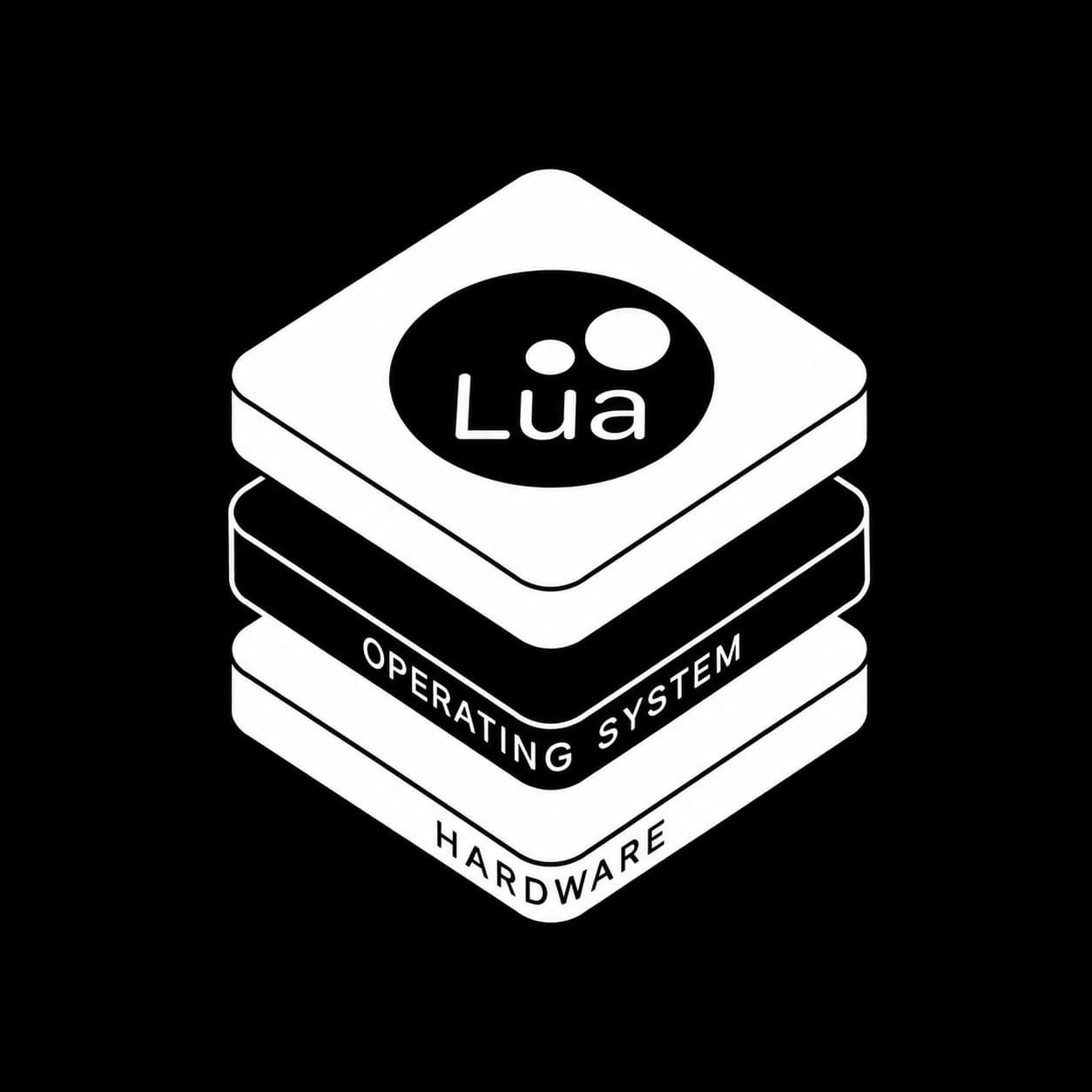
- 2Applications are built on a Lua Application Layer, ensuring a tiny footprint (200-500 KB RAM per app) and high performance, competitive with JavaScript JITs.
- 3The system utilizes an Embedded Rive Animation Runtime for lightweight, interactive vector animations, creating a 'cinematic interface motion' directly on the wearable hardware.
- 4Users can 'speak apps into existence,' creating hyper-personalized applications tailored to specific situations and needs.
- 5Monako Glass facilitates seamless interop, allowing tools and workflows to span across the wearable device, cloud sandboxes, and local Mac/PC environments.
Real-World Use Cases
On-the-Go Code Generation
Contextual Debugging Assistance
Real-time Documentation Retrieval
Automated Infrastructure Scripting
Privacy & Technical Details
- **Lua Application Layer:** Utilizes LuaJIT for extremely low memory footprint (200-500 KB RAM per app) and high performance, ensuring efficient resource usage on wearable devices.
- **Embedded Rive Animation Runtime:** Provides lightweight, interactive vector animations that are state-driven and fast, designed to run smoothly on wearable hardware without significant overhead.
- **No Build Step for Agents:** Agents can generate Lua apps on the fly and run them immediately, bypassing traditional compilation steps, which enhances responsiveness and flexibility.
- **Hyper-personalized Apps:** Emphasizes user control and customization, allowing individuals to create and share server-backed experiences tailored to their specific context.
- **Seamless Interop:** Designed to integrate workflows across Monako Glass, cloud sandboxes, and local Mac/PC, suggesting a distributed architecture where data and processing can occur on various platforms.
Pricing
Verified June 12, 2026Monako Glass does not publicly list its pricing tiers or subscription models on its official website. Interested users are directed to join a waitlist or contact the company directly for more information. This suggests a potential enterprise focus or an early-stage product with custom pricing.
Official pricing pageHonest Pros & Cons
Pros
- • Truly hands-free AI agent interaction for coding, a significant step towards futuristic development.
- • High performance and low resource consumption thanks to the Lua Application Layer.
- • Visually stunning and responsive user interface with embedded Rive animations.
- • Hyper-personalization allows for tailored apps and workflows for individual needs.
- • Seamless interoperability across wearable, cloud, and local computing environments.
- • Innovative approach to human-AI interaction, pushing the boundaries of wearable tech.
Cons
- • Requires specialized heads-up display hardware, limiting accessibility to early adopters or those with compatible devices.
- • Pricing information is not publicly available, making it difficult for potential users to assess cost-effectiveness.
- • The concept of hands-free coding might have a steep learning curve for traditional developers.
- • Reliance on voice commands or gestures could be challenging in noisy or public environments.
- • The practical limitations and ergonomic considerations of prolonged use on a heads-up display are yet to be fully understood.
- • As a nascent technology, widespread adoption and robust community support may take time to develop for Monako Glass.
Comparison Table
| aspect | native | rewind | manual | monako |
|---|---|---|---|---|
| AI Agent Interaction | Keyboard/mouse-driven via IDE extensions (e.g., GitHub Copilot) | Passive recording, retrospective search/summary on desktop | Typing queries into search engines or documentation | Hands-free, voice/gesture-driven via HUD |
| Development Environment | Feature-rich IDEs (VS Code, IntelliJ) on desktop | Desktop application for content capture and retrieval | Text editors, command line interfaces | Lua-based, lightweight apps on wearable OS |
| UI/UX | Standard graphical user interfaces (GUI) on monitors | Desktop application GUI for browsing captured data | Basic text-based interfaces or simple GUIs | Cinematic Rive animations, heads-up display |
| Contextual Awareness | Limited to current file/project, requires manual input for broader context | Retrospective context from recorded screen/audio | Human memory and manual information gathering | Hyper-personalized, real-time, environmental context |
Who Should Use Monako Glass
Monako Glass is ideal for early adopters and developers eager to explore the cutting edge of human-AI interaction and wearable computing. It suits those who require hands-free coding assistance in dynamic environments, or who want to experiment with hyper-personalized, context-aware applications. Developers looking to push the boundaries of productivity beyond traditional desktop setups will find Monako Glass particularly appealing.
Who Should Skip
Developers who prefer traditional desktop-based IDEs and keyboard/mouse interaction may find Monako Glass too experimental or cumbersome. Those without access to compatible heads-up display hardware, or who are budget-conscious and require transparent pricing, should likely skip Monako Glass for now. Users who need a mature, widely adopted solution with extensive community support might also want to wait.
Our take
Worth testing
Monako Glass presents a compelling vision for the future of coding, moving beyond the desktop to offer hands-free, context-aware AI assistance via heads-up displays. Its technical foundation, leveraging Lua for performance and Rive for immersive UI, is impressive. While the lack of public pricing and the dependency on nascent hardware are current drawbacks, Monako Glass stands out as a truly innovative platform. It's a bold step towards a sci-fi future of development, poised to redefine how we interact with code and AI, making it a product to watch for those at the forefront of technology.
Current status: no tracked affiliate for Monako Glass. This review is independent and not sponsored. We update this as programs become available (PartnerStack, Impact, etc).