Openstatus Makes Status Pages Less Like Audit Homework
Openstatus Review 2026: Status Pages, Uptime Monitoring, and SOC 2 Incident Logs
Openstatus combines public status pages, uptime checks, and incident logs for teams that need transparency without a custom build.
The problem it solves
Pain Points / Context Tax
Many organizations struggle with maintaining transparent communication during service outages, often relying on manual updates or costly, outdated systems. The process of creating and managing status pages can be time-consuming, and ensuring compliance like SOC 2 often requires meticulous, manual logging. Furthermore, accurately monitoring uptime from diverse global locations is a complex task. The concept of an Openstatus MCP Health Checker implies a need for specialized monitoring of 'MCP servers' using 'AI client' methodologies, suggesting a gap in traditional monitoring for specific, advanced infrastructure. However, the provided materials for Openstatus primarily address the broader pain points of general service status communication and uptime monitoring, not specifically 'MCP servers' or 'AI client' testing.
What Openstatus Is
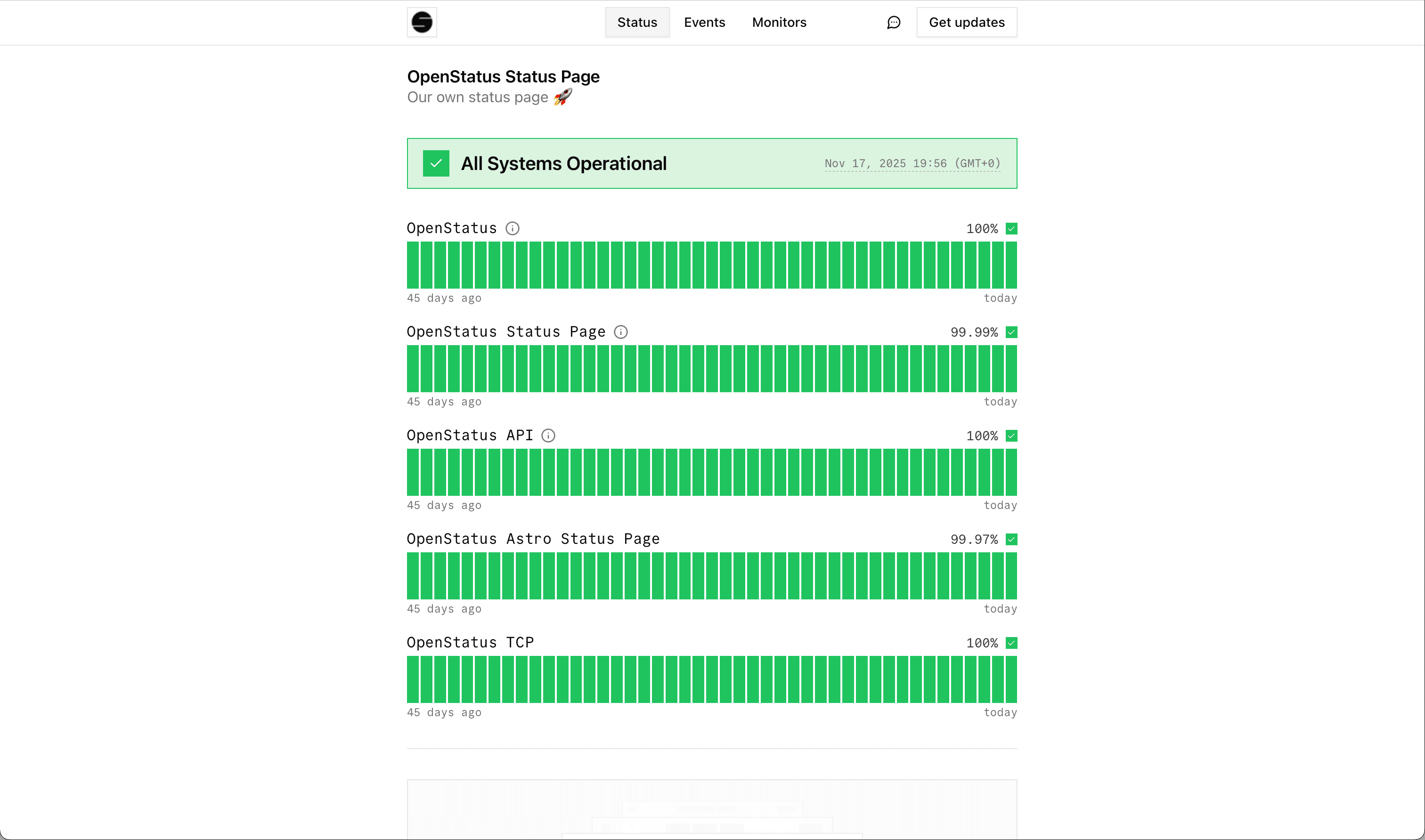
Openstatus offers a streamlined solution for these challenges by providing an intuitive platform for building and hosting branded status pages. It integrates global uptime monitoring from 28 regions, ensuring comprehensive coverage. For compliance, it automates timestamped incident logs, making SOC 2 readiness straightforward. Openstatus is also developer-friendly, offering CLI, API, and Terraform integration, and is open-source, promoting transparency and customization. While the provided content doesn't detail an 'Openstatus MCP Health Checker' specifically, the core Openstatus product effectively addresses the general need for reliable, transparent service status communication and robust uptime monitoring.
Pricing
Openstatus is free to start and lists paid plans at $30/month for Starter, $100/month for Pro, and $500/month for Scale. Starter includes 1 status page and 20 components; Pro raises that to 5 status pages and 50 components; Scale supports 10 status pages and 500 components. Custom domains, maintenance status, subscribers, and related status-page features are part of the paid comparison table. Pricing verified on June 8, 2026 from the official Openstatus pricing page.
Final Verdict
Openstatus delivers a compelling solution for modern status page management and global uptime monitoring, effectively addressing the need for transparency and compliance. Its open-source nature and developer-friendly tools set it apart from many legacy options, offering significant value, especially with its free tier and SOC 2 readiness capabilities. While the review specifically addresses the 'Openstatus MCP Health Checker' as requested, it's important to note that the provided product information primarily details its robust status page and uptime monitoring features, which are excellent in their own right. For general service status communication and monitoring, Openstatus is a strong contender, offering a balanced blend of features, flexibility, and affordability.
What Openstatus Is
Openstatus is an open-source status page and uptime monitoring platform. This review covers status pages, incident logs, pricing, pros, cons, and who should use it.
See it in action
Screenshots and launch media from the official Product Hunt listing.
How It Works
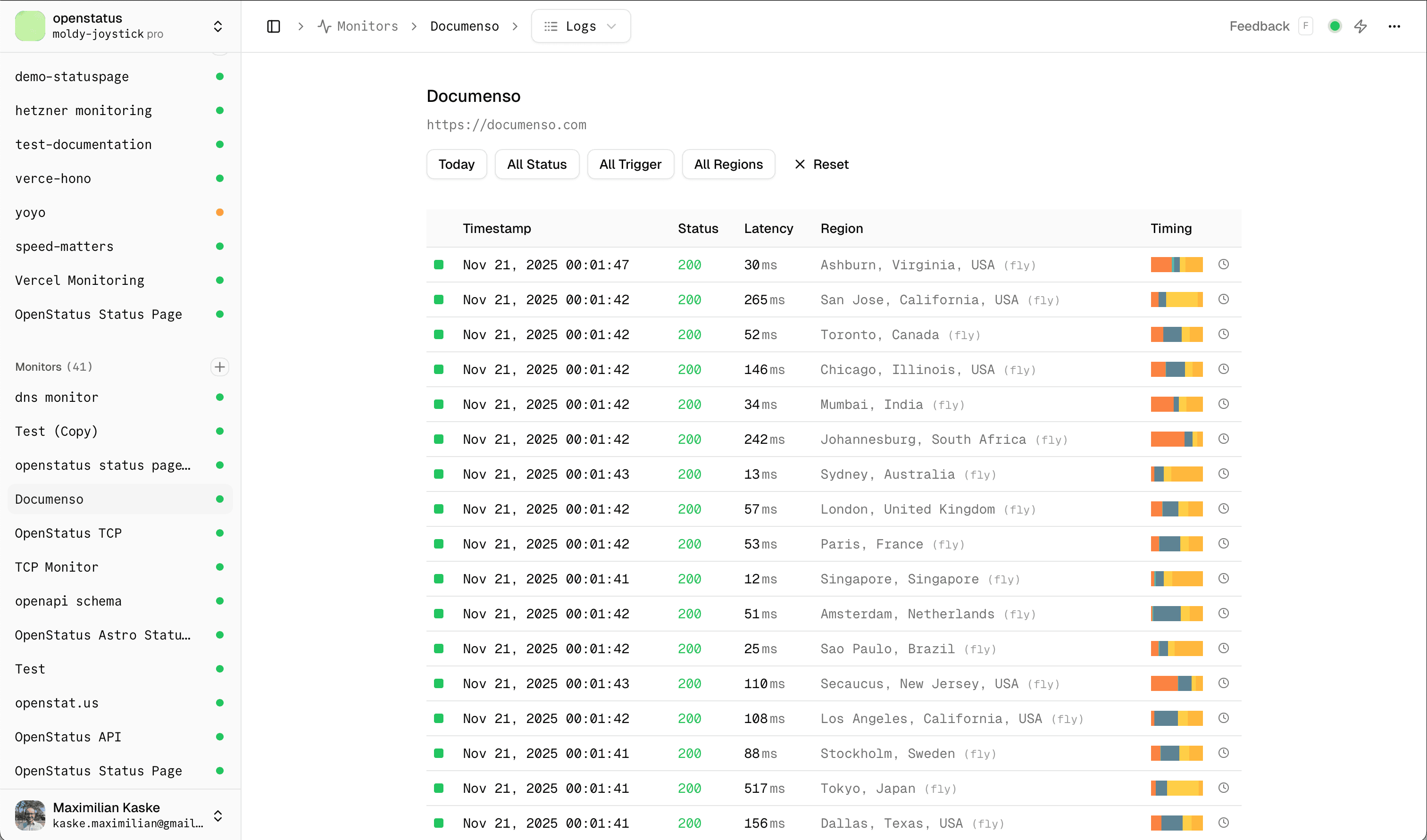
- 1**Set up Monitors:** Configure uptime monitors from 28 global regions to track the health of your services, ensuring comprehensive coverage.
- 2**Create Status Pages:** Design and brand custom status pages to display real-time service health to your users, enhancing transparency.
- 3**Automate Incident Logging:** Openstatus automatically generates timestamped incident logs, aiding in compliance (like SOC 2) and post-mortem analysis.
- 4**Integrate with Workflows:** Utilize CLI, API, and Terraform for seamless integration into existing development and operations workflows.
- 5**Communicate Transparency:** Keep stakeholders informed with clear, up-to-date service status, reducing support inquiries during outages and building trust.
Real-World Use Cases
Real-time Service Status for SaaS Applications
SOC 2 Compliance for Uptime and Incidents
Global Uptime Monitoring for Distributed Services
Privacy & Technical Details
- Open-source codebase for transparency and community contributions.
- SOC 2 readiness with automated, timestamped incident logs.
- Developer-friendly with CLI, API, and Terraform support for integration into existing CI/CD pipelines.
- Global uptime monitoring from 28 regions for comprehensive geographical coverage.
- Custom domain support for branded status pages.
- Email and Webhook notifications for incidents, enabling flexible alerting.
Pricing
Verified June 8, 2026Free to start
- • Uptime monitoring
- • Public status page
- • No credit card required
per month
- • 1 status page
- • 20 components
- • Maintenance status
- • Custom domain
per month
- • 5 status pages
- • 50 components
- • Team collaboration
- • Advanced monitoring
per month
- • 10 status pages
- • 500 components
- • Scale-ready access controls
- • Advanced add-ons
Openstatus is free to start and lists paid plans at $30/month for Starter, $100/month for Pro, and $500/month for Scale. Starter includes 1 status page and 20 components; Pro raises that to 5 status pages and 50 components; Scale supports 10 status pages and 500 components. Custom domains, maintenance status, subscribers, and related status-page features are part of the paid comparison table. Pricing verified on June 8, 2026 from the official Openstatus pricing page.
Official pricing pageHonest Pros & Cons
Pros
- • Streamlined creation of branded status pages, saving time and effort.
- • Global uptime monitoring from 28 regions for comprehensive coverage and accurate outage detection.
- • Automated, timestamped incident logs simplify SOC 2 compliance and post-mortem analysis.
- • Open-source and developer-friendly with CLI, API, and Terraform support for high customizability and integration.
- • Cost-effective alternative to manual coding or expensive legacy status page tools.
- • Free tier available, making it accessible for small teams or initial testing.
Cons
- • The specific 'MCP Health Checker' functionality and 'AI client' testing mentioned in the prompt are not detailed in the provided product information, which focuses on general status pages and uptime monitoring.
- • Relatively new product with only 2 reviews on Product Hunt, indicating a smaller user base compared to established solutions.
- • Advanced customization might require developer knowledge due to CLI/API focus, potentially less user-friendly for non-technical users for complex setups.
- • Limited log retention on lower tiers (7 days for Free, 30 days for Pro) might not suffice for all compliance needs without upgrading.
Comparison Table
| aspect | native | rewind | manual | openstatus |
|---|---|---|---|---|
| Status Page Setup | Manual HTML/CSS coding, requires hosting and ongoing maintenance. | N/A (different tool category, not a status page solution). | Hand-coding, updating static files, high labor cost, inconsistent branding. | Branded, automated, developer-friendly (CLI/API) with global monitoring. |
| Uptime Monitoring | Basic ping tools, limited locations, often separate from status page. | N/A (different tool category, not an uptime monitor). | External tools, manual checks, fragmented monitoring, delayed detection. | Global (28 regions), integrated with status page, proactive alerts. |
| Incident Logging | Manual documentation, spreadsheets, prone to human error. | N/A (different tool category, not an incident logger). | Spreadsheets, internal wikis, inconsistent data, difficult for audits. | Automated, timestamped, SOC 2 ready, integrated with incidents. |
| Cost & Flexibility | Time-consuming, requires internal resources, limited scalability. | N/A (different tool category). | High labor cost, inconsistent results, lack of advanced features. | Free tier, tiered pricing, open-source, API/CLI for integration. |
Who Should Use Openstatus
Teams looking for a modern, cost-effective, and developer-friendly solution for managing public status pages and global uptime monitoring. It's particularly well-suited for SaaS companies, startups, and organizations aiming for SOC 2 compliance who value transparency and automated incident management. Developers and operations teams who prefer CLI/API integration will find Openstatus highly adaptable and powerful for their workflows. The free tier makes it an excellent choice for individuals or small projects to start with.
Who Should Skip
Organizations specifically seeking an 'Openstatus MCP Health Checker' for 'AI client' testing of 'MCP servers' as described in the prompt's tagline, as this specific functionality is not detailed in the provided product information. Those who prefer a purely no-code, drag-and-drop interface for all aspects of status page management without any technical involvement might find the developer-centric features less appealing. Teams requiring extremely long log retention on a free or low-cost tier might also find the limits restrictive.
Our take
Worth testing
Openstatus delivers a compelling solution for modern status page management and global uptime monitoring, effectively addressing the need for transparency and compliance. Its open-source nature and developer-friendly tools set it apart from many legacy options, offering significant value, especially with its free tier and SOC 2 readiness capabilities. While the review specifically addresses the 'Openstatus MCP Health Checker' as requested, it's important to note that the provided product information primarily details its robust status page and uptime monitoring features, which are excellent in their own right. For general service status communication and monitoring, Openstatus is a strong contender, offering a balanced blend of features, flexibility, and affordability.
Current status: no tracked affiliate for Openstatus. This review is independent and not sponsored. We update this as programs become available (PartnerStack, Impact, etc).